Cart
0
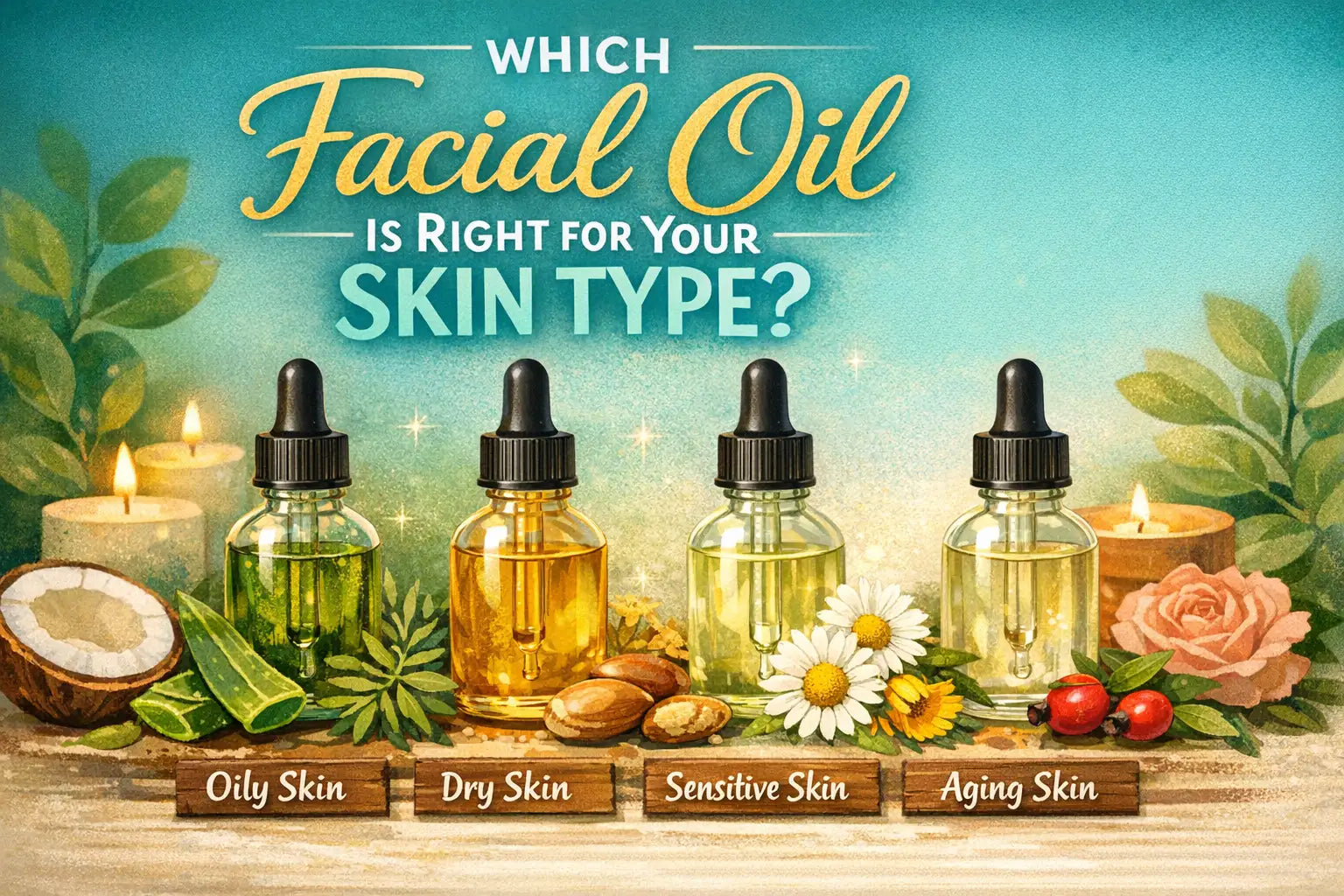

If you've ever stood in a skincare aisle wondering whether facial oil is actually for you, you're not alone. We hear this from customers all the time. "Won't oil make my skin greasier?" "Is facial oil for dry skin only?" "What if I break out?" Fair questions, all of them. And the answer, honestly, depends almost entirely on choosing the right facial oil for your skin type.
So let's get into it. Not in a dry, clinical way. Just the real stuff that'll help you figure out exactly what your skin needs and why the right oil can genuinely change things.
Why Facial Oil Works for Almost Every Skin Type
Here's something most people don't expect to hear: facial oil isn't just for dry skin. Research published in the Journal of Cosmetic Dermatology has shown that certain plant-based oils closely mimic the skin's natural lipid barrier, which means they can support balance rather than disrupt it.
The key word is "certain." Not all oils behave the same way on skin. Some are heavy and occlusive. Others are lightweight and non-comedogenic. Some are rich in linoleic acid. Others lean oleic. And those differences matter more than most people realise.
According to the American Academy of Dermatology, a healthy skin barrier is one of the most important factors in overall skin health. When that barrier is compromised, skin becomes reactive. It's more prone to sensitivity, oiliness, dryness, and congestion. The right facial oil can actually support barrier repair. The wrong one can make things worse.
Quick-Reference: Which Facial Oil Suits Your Skin?
Not sure where to start? This table shows exactly which Greer oil was made for which skin concern.
|
Skin Type |
What It Needs |
Best Greer Oil |
Key Benefit |
|
Dry / Dehydrated |
Deep nourishment, barrier support |
Lumira Everyday Facial Oil |
Rich in oleic fatty acids, absorbs fully |
|
Oily / Congested |
Lightweight balance, pore support |
Clearra Clarifying Facial Oil |
Non-comedogenic, helps regulate sebum |
|
Combination |
Balanced hydration without overload |
Lumira Everyday Facial Oil |
Lightweight enough for the T-zone |
|
Sensitive / Reactive |
Short ingredient list, gentle formula |
Lumira Everyday Facial Oil |
Minimal actives, low irritation risk |
|
Mature / Loss of Firmness |
Nourishment + elasticity support |
Contoura Firming Facial Oil |
Supports skin suppleness over time |
Facial Oil for Dry Skin: Nourishment Without the Wait

Dry skin needs oil. But not just any oil, and not just any amount.
If your skin feels tight after washing, flakes easily, or drinks up moisturiser in minutes, you've got dry skin. What it's missing is lipids. Your skin barrier isn't retaining moisture properly, and an oil-based product can help reinforce that barrier while giving the skin what it needs to feel comfortable and look healthy.
The best facial oil for dry skin tends to be richer and more nourishing. Think oils high in oleic acid, like marula or rosehip, which absorb deeply and help restore suppleness. These oils don't just sit on top. They work their way into the upper layers of the skin to actually support hydration retention.
We see this a lot with customers in drier, more inland areas like Johannesburg or the Northern Cape. One customer messaged us last winter to say her skin had been so dry and uncomfortable that she'd tried three different moisturisers with no real improvement. A few weeks with our Lumira Everyday Facial Oil and she said her skin felt like hers again. Not a dramatic medical claim. Just a real result from the right product for her skin type.
|
💧 Tip for dry skin Apply your facial oil while skin is still slightly damp after cleansing. The oil seals in that surface moisture rather than trying to create hydration from scratch. |
Facial Oil for Oily Skin: Yes, This Is a Thing
We know. It sounds completely backwards. But oily skin sometimes needs oil. Especially the right kind.
Studies in the Journal of Investigative Dermatology have found that sebum-deficient skin or skin that's been stripped by harsh cleansers can actually overproduce oil as a compensatory response. In other words: if your cleanser is too harsh or your routine too stripping, your skin fights back by producing more sebum. More oil.
Using a lightweight, non-comedogenic facial oil can actually help signal to your skin that it doesn't need to go into overdrive. It's counterintuitive. But it works, and we've seen it work.
The catch is you need an oil that won't clog pores. High in linoleic acid. Lightweight. Absorbed quickly. Jojoba is a classic choice here because it's technically a wax ester that mimics sebum almost exactly. Rosehip is another good one. What you want to avoid: anything occlusive or coconut oil-heavy if your skin is acne-prone.
Our Clearra Clarifying Facial Oil was designed specifically with oily and congested skin in mind. Not to suppress your skin's natural oil production. But to give it the balance it's looking for, so it doesn't feel the need to work so hard.

Facial Oil for Combination Skin: The Art of Balance
Combination skin is genuinely the trickiest to work with. Oily T-zone, dry cheeks, different needs in different areas. A lot of standard moisturisers end up feeling too heavy in some spots and not hydrating enough in others.
Facial oil can actually be a really elegant solution here. Because you can control exactly where and how much you apply. A little goes a long way. Use less on the oily zones, more on the drier areas. You're essentially customising your hydration without buying multiple products.
|
⚖️ Combination skin trick Apply slightly less oil to your T-zone and a little more to your cheeks and jaw. Your fingertips are your best tool here. Takes about 10 extra seconds and makes a real difference. |
Facial Oil for Sensitive or Reactive Skin
If your skin flares up easily, goes red, or reacts to things it probably shouldn't, you need to be careful about what you put on it. But that doesn't mean facial oil is off the table. It just means the formula matters more.
Research from dermatology journals suggests that a compromised skin barrier is at the root of most sensitivity reactions. And certain plant oils, particularly those rich in anti-inflammatory fatty acids like gamma-linolenic acid or omega-3s, may help support the barrier and reduce that reactivity over time.
The golden rule for sensitive skin and facial oils: keep the ingredient list short. Fewer ingredients means fewer potential irritants. Fragrance-free or very low in essential oils. And always patch test first, even with natural products.
Facial Oil for Mature Skin: Nourishing Where It Counts
Skin changes as we age. It produces less natural oil. Cell turnover slows. The barrier becomes thinner. And that means it needs more support to stay comfortable, supple, and looking its best.
According to research in the International Journal of Molecular Sciences, the skin's lipid content decreases with age, which contributes to the appearance of fine lines and loss of firmness. Facial oils rich in antioxidants and nourishing fatty acids can support the skin in maintaining its natural resilience.
Our Contoura Firming Facial Oil was formulated with mature skin in mind. Not with promises of "reversing ageing" (that's not a thing, honestly). But with the right blend of nourishing ingredients to support skin elasticity and help it look and feel its best.

How to Actually Use Facial Oil
Using it wrong can undo all the benefits. So let's get practical.
Apply to slightly damp skin. This helps lock in hydration rather than just sitting on the surface. 3-4 drops for the whole face is plenty. You really don't need more than that. Warm it between your palms first, then press into skin (not rub). Use it as the last step in your evening routine, or before SPF in the morning if it absorbs fully. And if you're new to facial oils, start every other night and build up slowly.
|
✅ Quick application summary Cleanse → tone (optional) → apply oil to damp skin → press in gently → follow with SPF in the morning. Simple. |
Ready to Find Your Match?
There's a facial oil for almost every skin type. It's not one-size-fits-all, but the approach is simple: know your skin, choose accordingly, and give it a few weeks.
Ready to find yours? Explore our full facial oil collection and see which formula suits your skin best. Not sure where to start? Get in touch with us and we'll help you figure it out.