Cart
0

Most people who decide to transition to natural skincare do it after something goes wrong. A breakout that won't quit. Skin that's suddenly reactive to things it was fine with before. A label check that raised more questions than answers. Or sometimes just a nagging feeling that it might be time to simplify.
Whatever brought you here, we want to give you an honest picture of what transitioning to natural skincare actually looks like. Not the Instagram version. The real one, including the adjustment period, the trial and error, and yes, eventually the point where your skin settles and you wonder why you waited so long.
Why People Make the Switch to Natural Skincare
Let's start here, because your "why" actually shapes how you should approach the transition.
Some people switch because they're reacting to something in their current products. Research from the American Contact Dermatitis Society suggests that synthetic fragrances are among the most common causes of contact dermatitis and skin sensitisation. Removing them can make a significant difference.
Others switch because they want to know what they're putting on their skin. According to the Environmental Working Group, the average person is exposed to dozens of synthetic ingredients through their daily skincare routine. For a lot of people, shifting to shorter, more recognisable ingredient lists just feels better.
The Honest Truth About the Adjustment Period
Here it is, upfront: your skin may not immediately love the switch. And that's okay. It doesn't mean natural skincare isn't working.
When you stop using certain conventional products, particularly those with heavy silicones, synthetic emollients, or ingredients that create a "film" effect on skin, your skin has to readjust to functioning without those props. For a little while, it may feel a bit off. More dryness. Or conversely, a bit more oiliness as your skin recalibrates.
This usually settles within two to four weeks. Sometimes six. The customers who get through this period tend to come out the other side with calmer, more balanced skin.
|
Give it 8 weeks before judging Skin operates in roughly four-week cycles. You need at least two of those to see genuine change. Two weeks is too soon to call it. |
How to Actually Transition (Without Overwhelming Yourself)
Don't overhaul everything at once. This is the most common mistake. People throw out everything and replace it all in a week. Their skin doesn't know what hit it, it reacts, and they blame natural skincare. Don't do this.
Instead, do it in stages. Start with your cleanser. It's in contact with your skin for the shortest amount of time, so it's the lowest risk place to start. Use it for a couple of weeks before changing anything else.
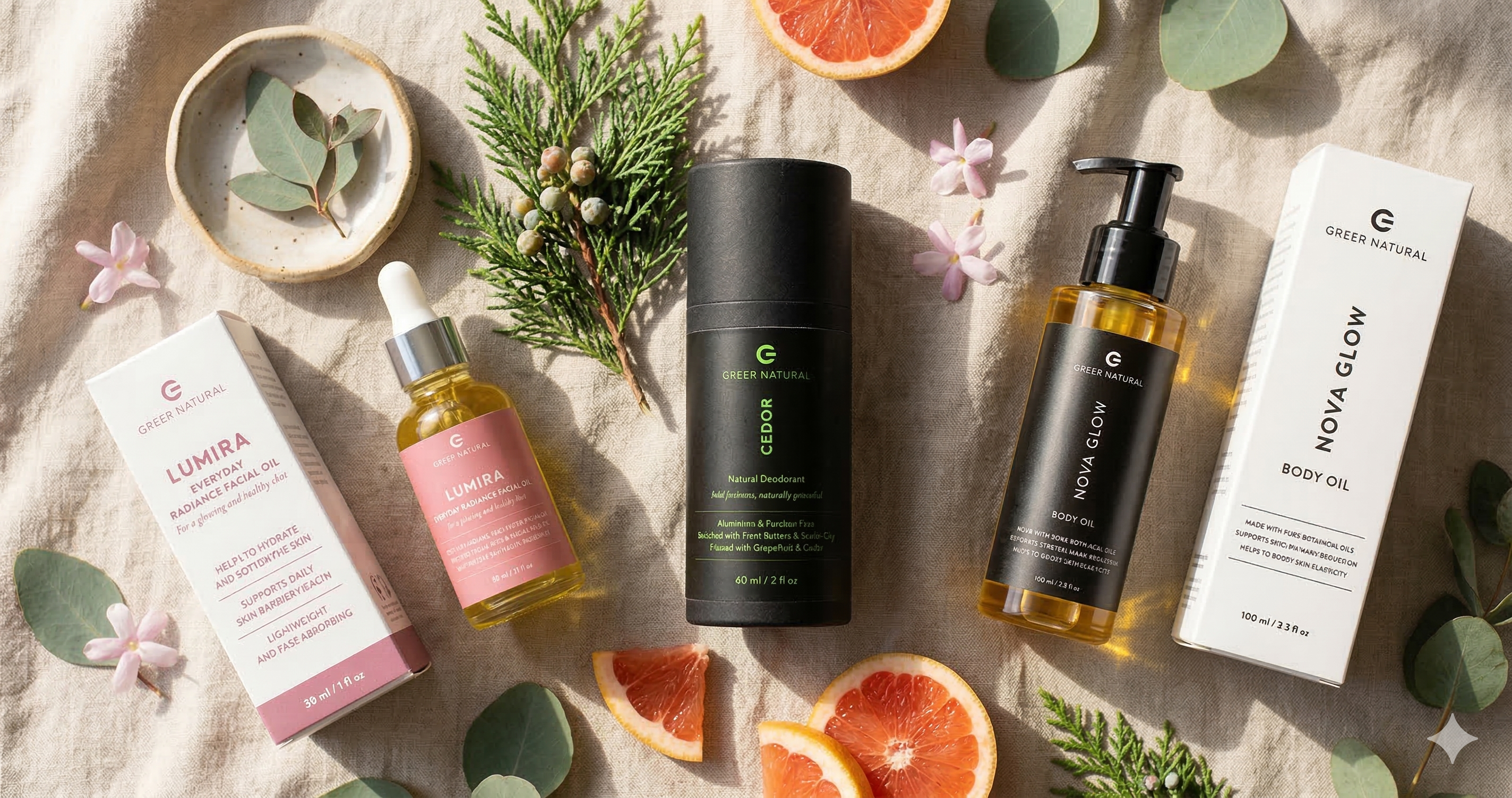
Then switch your moisturiser or facial oil. This is where the right product for your skin type really matters. Our Lumira Everyday Facial Oil is a good starting point for most skin types because it's versatile and lightweight.
Leave actives for last. If you're using retinol, AHAs, or vitamin C serums, don't rush to replace these. Get your base routine sorted first, then revisit actives.
Your Step-by-Step Transition Roadmap
This is a gentle, skin-safe way to make the switch without overwhelming your skin barrier.
|
Week |
What to Change |
What to Keep |
Watch For |
|
Week 1-2 |
Swap your cleanser for a gentle, natural formula |
Everything else as-is |
Skin feels the same or slightly better |
|
Week 3-4 |
Introduce a facial oil (patch test first!) |
Old moisturiser if needed |
Any redness or breakouts from the new oil |
|
Week 5-6 |
Switch your body moisturiser or add a body oil |
SPF (always keep your SPF) |
Dryness, itching, or improved softness |
|
Week 7-8 |
Switch deodorant to natural formula |
Anything working well so far |
The transition sweating period (normal) |
|
Week 9+ |
Reassess actives and serums |
What's working from your new routine |
Skin settling, barrier feeling stronger |
Patch Testing: Don't Skip This Step
We know. It feels unnecessary. But please patch test.
Natural doesn't automatically mean non-reactive. Plant oils contain dozens of naturally occurring compounds, and some people are sensitive to specific botanicals. Apply a small amount of any new product to your inner wrist or behind your ear. Wait 24 hours. If there's no reaction, you're probably fine to proceed.
Building a Simple Natural Skincare Routine

Here's the thing about natural skincare: it works best when it's simple. You don't need twelve steps. You don't need a different product for every concern. You need a few good things that actually suit your skin.
Cleanse gently, without stripping your skin's natural oils. Tone optionally with a simple rosewater if you like it. Then nourish with your facial oil, applied to slightly damp skin. And in the morning, protect with SPF. Always. According to WHO-radiation-and-skin-cancer), UV radiation is a leading cause of premature skin ageing. A broad-spectrum SPF 30+ every morning is non-negotiable.
|
The one rule that never changes Whatever your skincare philosophy, SPF every morning is not optional. It's the single most evidence-backed step in any routine, natural or not. |
Your Skin Type Still Matters
Natural skincare doesn't mean one-formula-fits-all. Your skin type should still guide every product choice you make. If you're dealing with oily or congested skin, lighter oils and gentle cleansers tend to work better. Our Clearra Clarifying Facial Oil was designed specifically for skin that's prone to congestion.
Research published in the British Journal of Dermatology has found that the skin microbiome plays a crucial role in barrier function and overall skin health. Products with a more natural composition may actually be gentler on that microbiome over time.
Don't Forget Your Body
The skin below your chin needs attention too. A good body oil applied to slightly damp skin after showering locks in moisture and leaves skin genuinely soft. Our Nova Glow Nourishing Body Oil is a customer favourite, particularly in winter when the dry Highveld air starts stripping skin. And if you're pregnant, our Nova Glow Pregnancy Body Oil was formulated with that specific season of life in mind.
Signs Your Transition Is Going Well
Skin feels more comfortable. Less tight, less reactive, less like it needs constant product to feel okay. You're using less product overall because your skin barrier is holding moisture better. Minor breakouts settle more quickly. And your routine takes less time because you've found things that actually work.
None of this happens overnight. But it does happen. Give it eight weeks before making a final call.
We're Here to Help
We're a small, South African brand. We handcraft our products in small batches with ingredients we've chosen carefully. And we genuinely care whether what we make works for your skin.
Browse our full range or get in touch and tell us about your skin. We'll point you in the right direction.