Cart
0
Natural Facial Oil South Africa: Finding the Right One for Your Skin
If you've ever walked down the skincare aisle feeling completely overwhelmed, you're not alone. The natural facial oil market in South Africa has exploded, and honestly? It's brilliant that we finally have options that don't involve flying products halfway across the world. But here's the catch: not all facial oils are created equal, and what works beautifully for your friend might leave your skin feeling like an oil slick.
This guide breaks down everything you need to know about choosing a natural facial oil in South Africa, which ingredients actually matter, and how to use them without turning your face into a grease pan. Let's dive in.
Why Natural Facial Oils Are Having Their Moment in South Africa
There's been a massive shift toward natural skincare in South Africa over the past few years, and it's not just a trend. People are reading ingredient lists, asking questions, and frankly, they're tired of products that promise the world but deliver irritation instead.
Natural facial oils fit perfectly into this movement. They're transparent (you can actually pronounce the ingredients), effective when formulated properly, and they work with your skin rather than against it. Plus, many of the botanical oils used in these products have been trusted for centuries.
According to recent research published in 2024, plant-based oils can provide significant benefits for skin barrier function and hydration through multiple mechanisms including promoting skin barrier homeostasis, antioxidative activities, and anti-inflammatory properties.
But here's what most people get wrong: they assume all oils will make them break out. Not true.
The "Oils Make Me Break Out" Myth
Let's address this head-on because it stops so many people from trying what could genuinely transform their skin.
Your skin produces sebum naturally. When you strip it away with harsh cleansers, your skin panics and produces even more oil to compensate. It's a vicious cycle. The right natural facial oil can actually help balance this process.
The trick? Choosing oils that match your skin's needs.
Lightweight oils like jojoba are remarkably similar to your skin's natural sebum, which means they absorb quickly without clogging pores. Heavier oils like evening primrose work beautifully for dry skin but might feel too rich if you're already dealing with excess oil.
It's not about avoiding oils altogether. It's about finding the right ones.
How to Choose a Natural Facial Oil for Your Skin Type
Here's where things get practical. South African skin deals with unique challenges: intense UV exposure, dry inland climates, humid coastal weather, and everything in between. Your facial oil needs to work with these conditions, not against them.
Oily and Blemish-Prone Skin
If your skin tends toward oiliness or breakouts, you need a facial oil for oily skin that's lightweight and balancing. Look for:
- Jojoba oil: Mimics your skin's sebum, so it absorbs quickly
- Grapeseed oil: Light texture, rich in linoleic acid which oily skin often lacks
- Rosehip oil: Non-comedogenic and helps with skin texture
- Evening primrose oil: Contains gamma-linolenic acid (GLA) which supports skin barrier health
Here's something worth knowing: research published in January 2025 that acne-prone skin is often deficient in linoleic acid, an essential fatty acid. When linoleic acid levels are low, sebum becomes thicker and more likely to clog pores. Oils high in linoleic acid, like grapeseed, can help correct this deficiency.
Additionally, a 2023 study showed that linoleic acid influences sebocyte function (the cells that produce sebum), which helps explain why oils rich in this fatty acid can be beneficial for oily and acne-prone skin. When sebum has adequate linoleic acid, it remains more fluid and less likely to clog pores.
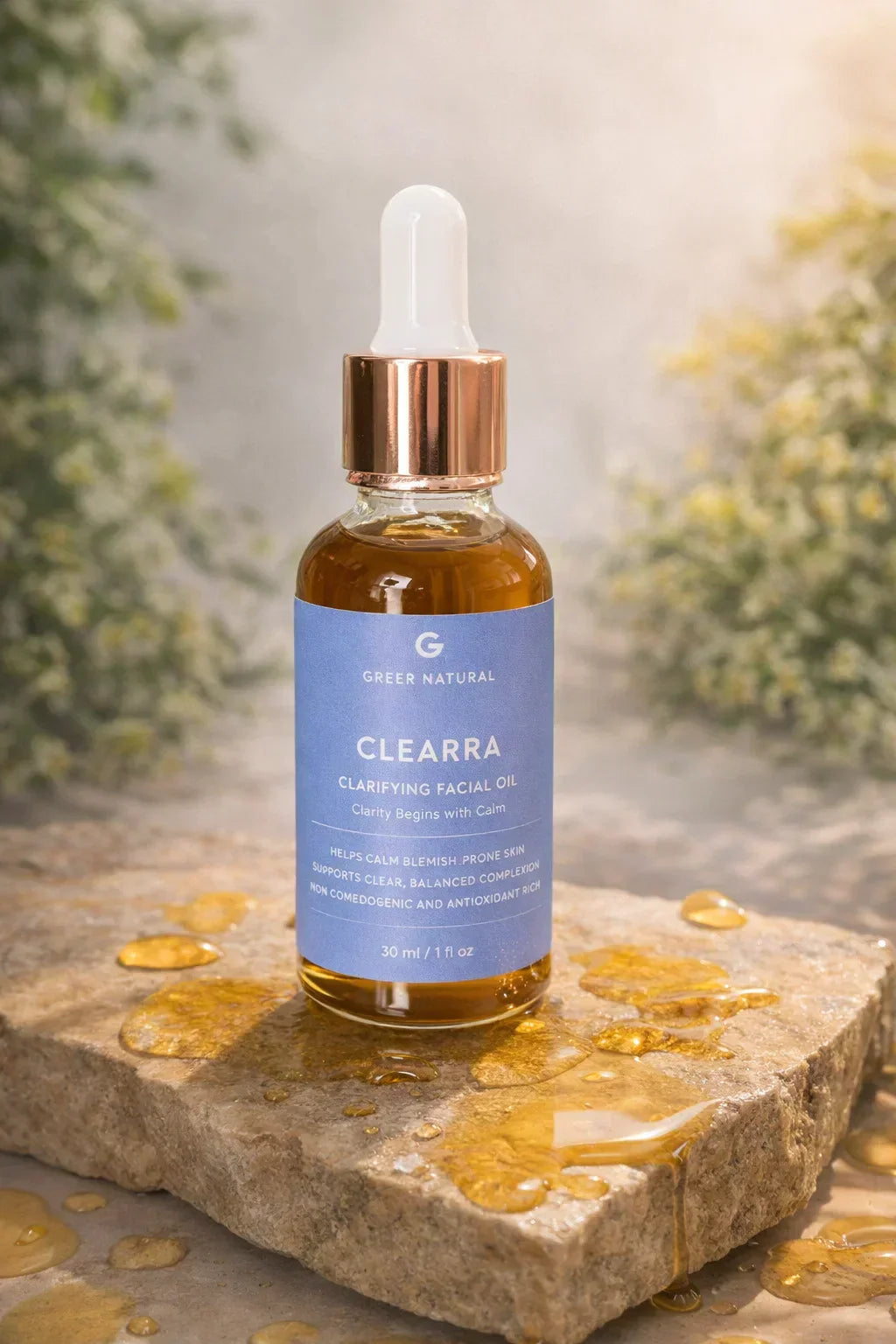
Clearra Clarifying Facial Oil was specifically formulated for this skin type. It combines jojoba, grapeseed, rosehip, and evening primrose in a lightweight blend that absorbs fast without leaving residue. The addition of frankincense and lavender oils helps calm visible redness while supporting clearer-looking skin.
Worth noting: this isn't harsh treatment. It's gentle support for skin that's often been over-stripped by aggressive products.
Dry and Dehydrated Skin
Dry skin needs richer, more nourishing oils that provide lasting hydration. You'll want oils high in omega fatty acids and antioxidants.
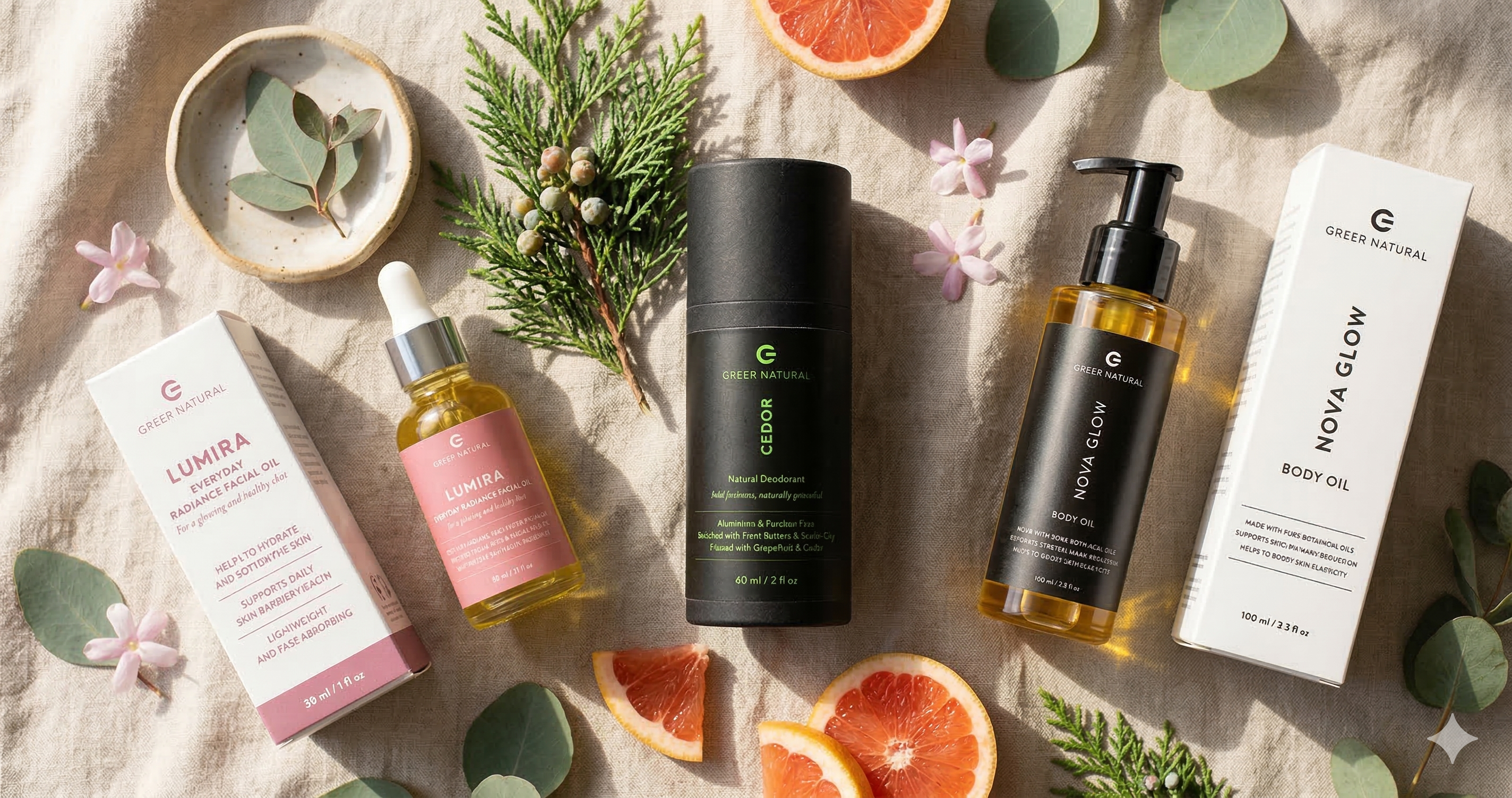
For everyday hydration, Lumira Everyday Facial Oil offers balanced nourishment that works well for most skin types, including dry skin that needs consistent moisture without heaviness.
Mature Skin
As skin ages, it needs extra support for elasticity and firmness. Look for oils rich in antioxidants and vitamins.
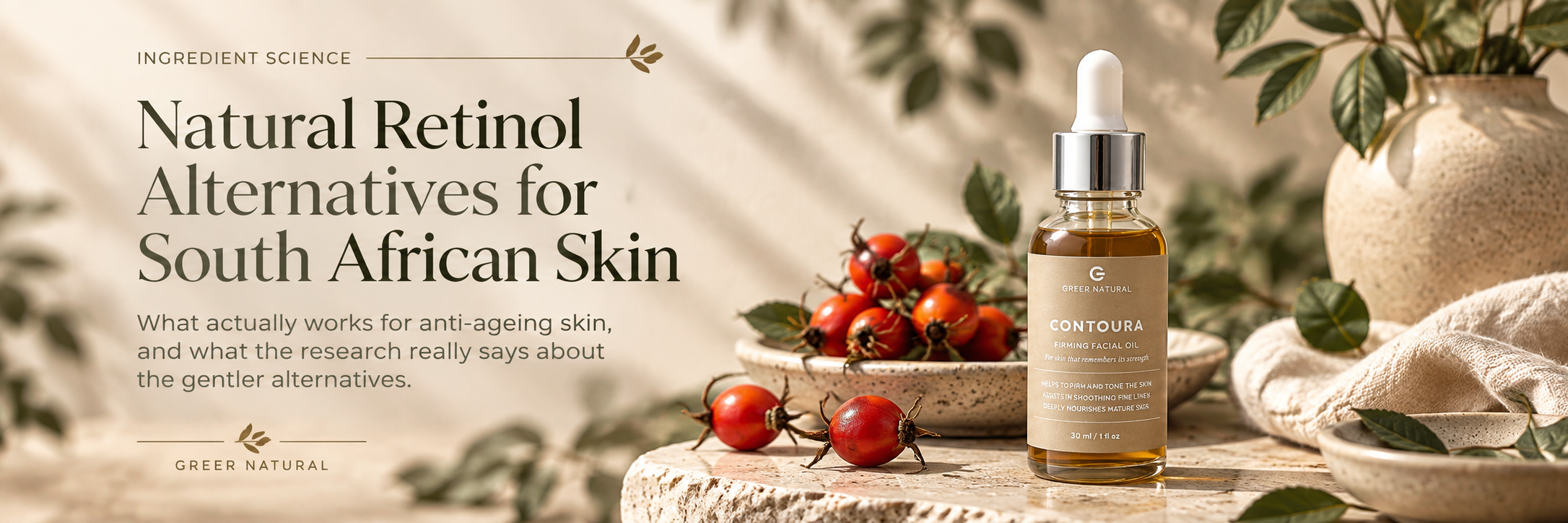
Contoura Firming Facial Oil is formulated specifically for mature skin, with ingredients chosen to support skin's natural firmness and provide deep nourishment.
Sensitive Skin
Sensitive skin requires gentle, soothing ingredients without synthetic fragrances or harsh additives. Natural facial oils with calming botanical extracts work well here.
The key is choosing products formulated in small batches with quality control. Mass-produced oils often include fillers or fragrance that can trigger reactions.
Key Ingredients to Look For in Natural Skincare South Africa

When you're shopping for natural skincare in South Africa, ingredient knowledge is power. Here's what actually matters:
Evening Primrose Oil
Rich in GLA, this oil supports skin barrier function. Studies have shown that evening primrose oil supplementation can improve skin moisture, transepidermal water loss, elasticity, and firmness. It's particularly helpful for sensitive or reactive skin.
Jojoba Oil
Technically a wax ester, jojoba's molecular structure closely resembles human sebum. This makes it ideal for all skin types, including oily skin, because it helps balance oil production rather than adding more.
Rosehip Oil
Packed with vitamins A and C, rosehip oil is known for supporting skin regeneration and evening out skin tone. Research indicates it contains high levels of essential fatty acids that benefit skin health and barrier repair.
Grapeseed Oil
Light and easily absorbed, grapeseed oil is high in linoleic acid. Research suggests that acne-prone skin is often deficient in linoleic acid, making this ingredient particularly valuable for clarifying facial oils.
Vitamin E (Tocopherol)
A powerful antioxidant that protects oils from oxidation and supports skin health. It's a natural preservative in quality facial oils.
According to a 2022 review in Frontiers in Pharmacology, vegetable oils and butters contain various bioactive compounds that can benefit skin health when used topically, including fatty acids, vitamins, and antioxidants that support skin barrier function and hydration.
How to Use Facial Oil in Your Skincare Routine

Getting the application right makes all the difference between glowing skin and a greasy mess.
Timing matters.
Apply your natural facial oil to slightly damp skin after cleansing. The dampness helps the oil spread easily and lock in hydration. Morning and evening application works well for most people.
Less is genuinely more.
You only need 3-5 drops. Seriously. More doesn't mean better results, it just means a shiny face and wasted product.
Warm it first.
Rub the oil between your palms before applying. This warms it slightly, making it easier to spread and absorb.
Press, don't rub.
Gently press the oil into your skin rather than rubbing vigorously. This helps with absorption and is less irritating.
Layer correctly.
If you're using other products, apply your facial oil after water-based serums but before heavier creams. Or use it as your final step if it's rich enough to be your sole moisturiser.
What Makes South African Natural Skincare Different
There's something special about natural skincare formulated in South Africa. Local brands understand the climate challenges we face, from the dry Highveld winter to the humid KwaZulu-Natal coast.
Small-batch production means quality control. When a brand handcrafts their products rather than mass-producing them, they can ensure consistency and freshness. Natural oils degrade over time, so fresher is genuinely better.
Supporting local also means shorter supply chains, which matters for product stability. Your facial oil hasn't been sitting in warehouses or shipping containers for months before reaching your bathroom shelf.
Plus, there's the transparency factor. Smaller South African brands tend to be more accessible and honest about their ingredients and processes. You can actually contact them with questions and get real answers.
Common Mistakes When Using Facial Oils
Skipping patch tests.
Even natural ingredients can cause reactions. Always test a new oil on a small area first, especially if you have sensitive skin.
Using expired products.
Natural oils don't last forever. If your oil smells off or has changed color, it's oxidized. Toss it.
Applying to bone-dry skin.
Oils work best on damp skin. They lock in moisture rather than providing it, so you need that initial hydration.
Giving up too soon.
Your skin needs time to adjust. Give a new facial oil at least 2-3 weeks before deciding if it works for you.
Mixing with the wrong products.
Some active ingredients don't play well with oils. If you're using prescription treatments, check with your dermatologist about timing.
Building a Simple Natural Skincare Routine
You don't need ten products. Honestly, a simple routine often works better than an elaborate one.
Morning:
- Gentle cleanser (if needed)
- 3-5 drops of facial oil on damp skin
- Sunscreen (always)
Evening:
- Remove makeup/sunscreen
- Cleanse
- 3-5 drops of facial oil on damp skin
That's it. If your skin needs more, you can add a hydrating toner between cleansing and oil, but many people find that a quality natural facial oil provides all the moisture they need.
Why Quality Matters More Than Price
Here's something worth understanding: not all natural facial oils are equal, even when ingredient lists look similar.
Sourcing matters. Where do the oils come from? How are they extracted? Cold-pressed oils retain more nutrients than those processed with heat or solvents.
Storage and handling affect quality. Oils exposed to light and heat degrade quickly, losing their beneficial properties.
Small-batch production allows for better quality control. Each batch can be tested and monitored rather than relying on mass production where consistency varies.
This doesn't mean you need to spend a fortune, but the cheapest option rarely delivers the best results. A quality natural facial oil in South Africa typically ranges from R300-R450 for 30ml, which lasts 2-3 months with daily use.
Signs Your Facial Oil Is Actually Working
How do you know if your natural skincare routine is delivering results? Look for these changes over 2-4 weeks:
- Skin feels hydrated without looking greasy
- Less visible redness or irritation
- Smoother texture when you touch your face
- More even skin tone
- Reduced tightness, especially after cleansing
- Makeup applies more smoothly
- Less need for heavy moisturisers
What you shouldn't see: increased breakouts, irritation, or clogged pores. If these happen, the oil might not suit your skin type, or you're using too much.
Making the Switch to Natural Facial Oils
If you're coming from conventional skincare, there's often an adjustment period. Your skin has gotten used to synthetic ingredients, and it needs time to recalibrate.
Some people experience a brief "purging" period where existing congestion comes to the surface. This typically resolves within 2-3 weeks. If it continues longer or gets worse, that's not purging, that's a reaction, and you should stop using the product.
Start with one product at a time. Don't overhaul your entire routine at once, or you won't know what's helping and what isn't.
Be patient. Natural skincare works with your skin's natural processes, which means results build gradually rather than overnight.
Frequently Asked Questions About Natural Facial Oils
Will facial oil make my oily skin worse?
Not if you choose the right one. It sounds counterintuitive, but lightweight oils like jojoba and grapeseed actually help balance oil production. When you strip oil from your skin with harsh products, your skin overcompensates by producing more. The right facial oil signals your skin that it's hydrated enough, reducing excess sebum production. Look for oils high in linoleic acid (like those in Clearra Clarifying Facial Oil) which research shows can help normalise oily, acne-prone skin.
How long does a 30ml bottle of facial oil last?
With proper use (3-5 drops twice daily), a 30ml bottle typically lasts 2-3 months. If you're using more than this, you're probably applying too much. A little goes a long way with quality facial oils.
Can I use facial oil if I have acne or breakouts?
Yes, but choose non-comedogenic oils formulated for blemish-prone skin. Oils containing jojoba, grapeseed, rosehip, and evening primrose are particularly beneficial. Research shows that acne-prone skin is often deficient in linoleic acid, and using oils rich in this fatty acid can actually help reduce breakouts. Avoid heavy, pore-clogging oils like coconut oil on your face if you're prone to breakouts.
Should I use facial oil in the morning or evening?
Both! Apply 3-5 drops to damp skin after cleansing, morning and night. In the morning, follow with sunscreen. Many people find their facial oil provides enough hydration that they don't need an additional moisturiser, but you can layer if your skin needs extra richness.
Will facial oil interfere with my sunscreen?
No, as long as you apply them in the correct order. After cleansing in the morning, apply your facial oil to damp skin, wait 1-2 minutes for it to absorb, then apply your sunscreen. The oil helps prep your skin and can actually make sunscreen application smoother.
How do I know if a facial oil has gone bad?
Natural oils oxidize over time. Signs your oil has expired include: a rancid or off smell, change in colour (usually darker), change in texture, or separation that doesn't remix when shaken. Most natural facial oils last 6-12 months once opened if stored properly in a cool, dark place. Always close the lid tightly after use.
Can I mix facial oil with my moisturiser?
You can, but it's not necessary and may reduce effectiveness. For best results, apply oil to damp skin right after cleansing. If you need extra moisture, wait for the oil to absorb (about 30 seconds to a minute) then apply moisturiser over top. Mixing them together can disrupt how each product is designed to work.
What's the difference between facial oil and body oil?
Facial oils are typically lighter, more refined, and formulated with ingredients suited for the delicate skin on your face. They're also designed to be non-comedogenic (won't clog pores). Body oils can be richer and heavier since body skin is thicker and less prone to breakouts. While you can use facial oil on your body, avoid using body oil on your face as it may be too heavy.
Is natural facial oil safe during pregnancy?
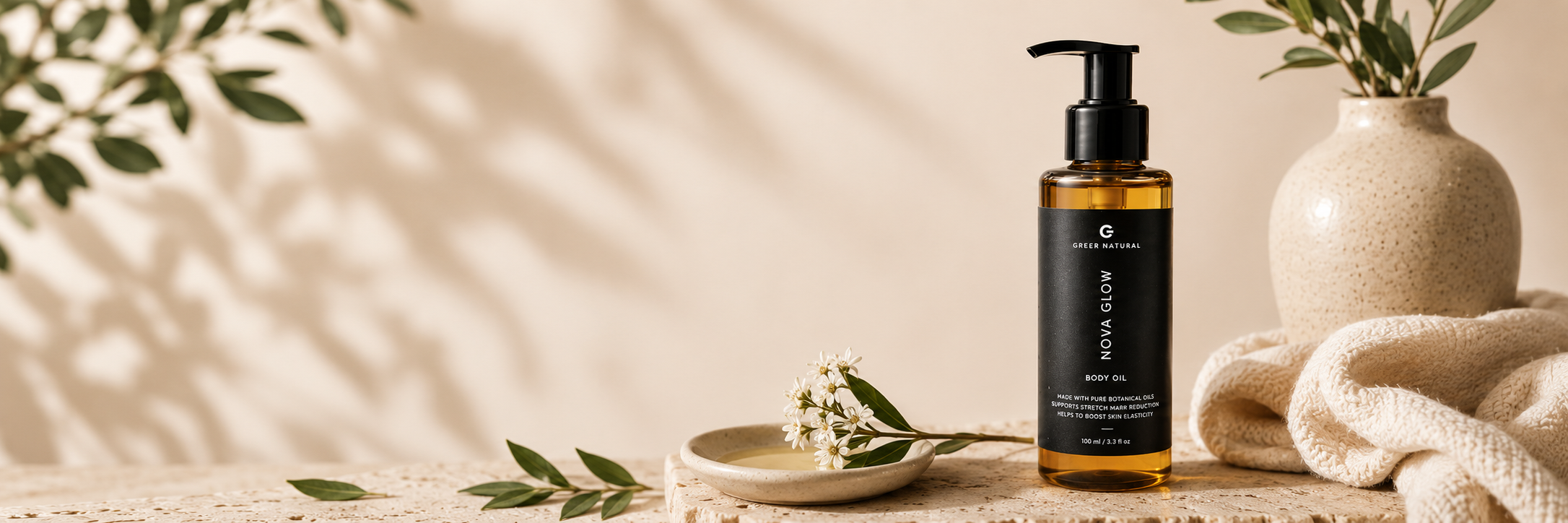
Most natural facial oils are safe during pregnancy, but always check the ingredient list. Avoid essential oils like rosemary, sage, and certain others in high concentrations. Jojoba, grapeseed, and evening primrose oils are generally considered safe. If you're unsure, consult with your healthcare provider. For body care during pregnancy, consider a product specifically formulated for expectant mothers, like Nova Glow Pregnancy Body Oil.
Can teenagers use facial oil?
Absolutely! In fact, many teenagers with oily or acne-prone skin benefit greatly from the right facial oil. Teen skin is often over-stripped by harsh acne treatments, which causes the skin to produce even more oil. A lightweight, balancing facial oil like Clearra can help normalize oil production and support clearer skin without irritation.
Why are some facial oils so expensive?
Price reflects several factors: sourcing quality (cold-pressed oils retain more nutrients but cost more to produce), small-batch production for freshness, packaging that protects the oil from light and oxidation, and the concentration of beneficial ingredients. A 30ml bottle of quality facial oil lasts months with daily use, making the cost-per-use quite reasonable compared to conventional moisturisers.
Do I still need a moisturiser if I use facial oil?
It depends on your skin type and the richness of your oil. Many people find that a good facial oil provides all the hydration they need, especially when applied to damp skin. However, if you have very dry skin or live in an extremely dry climate, you might benefit from layering a moisturiser over your oil for extra barrier protection. Listen to your skin and adjust accordingly.
Ready to Try Natural Facial Oil?
Finding the right natural facial oil in South Africa doesn't need to be complicated. Focus on quality ingredients, choose for your skin type, and give your skin time to adjust.
If you're dealing with oily or blemish-prone skin, Clearra Clarifying Facial Oil offers a lightweight, balancing formula that supports clearer skin without harsh ingredients. For everyday hydration, explore our complete range to find what suits your needs.
Still have questions? Get in touch – we're always happy to help you find the right natural skincare for your skin.